

“hypersonic missile”:
Hypersonic Missile: The Future of Military Supremacy
In recent years, the term hypersonic missile has rapidly moved from obscure military jargon to a buzzword shaping global defense strategies. From the United States to Russia and China, leading nations are investing billions into this game-changing technology. But what exactly is a hypersonic missile? Why is it considered the future of modern warfare? And how does it differ from traditional missile systems?
This article dives deep into everything you need to know about hypersonic missiles—how they work, why they matter, and what they mean for the balance of global power.
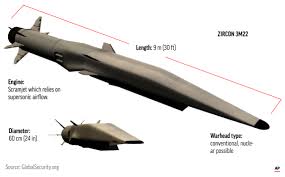
What is a Hypersonic Missile?
A hypersonic missile is a missile that travels at speeds of Mach 5 or higher, which means five times the speed of sound—or over 3,800 miles per hour (6,100 km/h). At this velocity, hypersonic missiles can cross continents in minutes, drastically reducing reaction times for defense systems.
There are two main types of hypersonic weapons:
- Hypersonic Glide Vehicles (HGVs): These are launched from a rocket and then glide toward their target at hypersonic speeds, maneuvering unpredictably in the atmosphere.
- Hypersonic Cruise Missiles: These use advanced propulsion systems like scramjets to maintain hypersonic speeds throughout their flight within the atmosphere.
adsmu
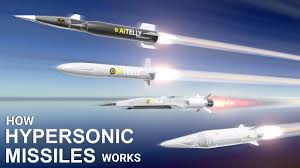
How Do Hypersonic Missiles Work?
Unlike traditional ballistic missiles that follow a predictable arc, hypersonic missiles combine speed and maneuverability. After launch, they either glide (HGVs) or fly (cruise missiles) toward their target at extremely high speeds.
This speed, paired with irregular flight paths, makes them nearly impossible for modern missile defense systems to detect, track, or intercept effectively.
Key components include:
- Thermal shielding: Necessary to withstand the extreme heat generated by air friction at Mach 5+.
- Advanced navigation systems: To maintain accuracy despite the unpredictable trajectory.
- Precision targeting tech: Ensures they can strike military or strategic infrastructure with minimal error.
adsmu
Hypersonic vs Ballistic Missiles: What’s the Difference?
| Feature | Ballistic Missiles | Hypersonic Missiles |
|---|---|---|
| Speed | Up to Mach 20 | Mach 5–Mach 10+ |
| Flight Path | Predictable parabolic trajectory | Maneuverable and unpredictable |
| Launch Method | Rocket-powered | Rocket or air-breathing propulsion |
| Detectability | Easier to detect and intercept | Extremely hard to track/intercept |
| Time to Target | 15–30 minutes | 5–15 minutes |
Hypersonic missiles blur the line between conventional and nuclear warfare. Their agility and speed make them ideal for precision strikes without necessarily deploying nuclear warheads.
asdsmu
Who Has Hypersonic Missile Capabilities?
As of 2025, several countries are actively developing or have deployed hypersonic missile systems:
1. Russia
Russia was among the first to claim an operational hypersonic weapon—the Avangard HGV. The Kinzhal missile, a hypersonic air-launched ballistic missile, has also been showcased in combat drills and reportedly in real-world operations.
2. China
China’s DF-ZF hypersonic glide vehicle has been tested multiple times and is believed to be operational. It can reportedly reach speeds up to Mach 10 and has been integrated into China’s DF-17 missile system.
3. United States
The U.S. is investing heavily in hypersonic research, with programs like the Conventional Prompt Strike (CPS) and Hypersonic Air-breathing Weapon Concept (HAWC). While not yet fully deployed, successful tests suggest operational capability is imminent.
4. India, France, Australia, and Others
India, in partnership with Russia, is developing the BrahMos II, a hypersonic cruise missile. Other countries, including France, Japan, and Australia, are also entering the hypersonic arms race.
adsmu
Why Are Hypersonic Missiles So Important?
Hypersonic weapons redefine the speed of war. With the ability to reach targets in mere minutes and evade most missile defense systems, they offer:
- Tactical superiority over slower, more easily intercepted weapons.
- Deterrence: Just the existence of these weapons can prevent potential aggression.
- Strategic reach: They allow nations to strike high-value targets quickly and precisely.
Military analysts often describe hypersonic technology as a “third revolution” in warfare, following gunpowder and nuclear arms.
Challenges of Hypersonic Missile Technology
Despite their advantages, hypersonic missiles are not without limitations:
- Extreme Heat: Traveling at Mach 5+ generates enormous heat, which can damage onboard systems.
- Precision Engineering: The slightest design flaw can compromise accuracy or lead to total failure.
- High Cost: Developing and deploying hypersonic missiles is prohibitively expensive.
- Global Instability: Their rapid deployment potential increases the risk of miscalculation and accidental escalation.
These challenges mean only technologically advanced and well-funded nations can afford to develop and deploy hypersonic systems.
The Future of Hypersonic Missiles
As competition intensifies, the future of hypersonic missiles looks increasingly dominant in global defense doctrines. Expect the following in the coming years:
- Increased deployment of operational hypersonic systems.
- Arms control debates, as nations push for treaties to limit hypersonic weapon proliferation.
- Investment in countermeasures, including space-based sensors and AI-powered defense systems.
- Civilian applications, possibly in aerospace and high-speed transport (though far down the line).
What’s clear is this: the hypersonic missile race is not just about weapons—it’s about who controls the future of warfare.
Final Thoughts
The rise of the hypersonic missile marks a pivotal shift in military technology. With unmatched speed, precision, and unpredictability, these weapons are reshaping the geopolitical landscape and prompting global powers to rethink their defense strategies.
While the full impact of hypersonic weapons is yet to unfold, one thing is certain: the age of hypersonic warfare has already begun.
SEO Meta Description:
Discover what a hypersonic missile is, how it works, who possesses them, and why it’s changing the future of global defense. Dive into the hypersonic missile arms race now.
