“ASIC”,
ASIC: Everything You Need to Know About Application-Specific Integrated Circuits
In today’s tech-driven world, the acronym ASIC is gaining traction across various industries — especially in cryptocurrency mining, AI development, and electronics. But what exactly is an ASIC, and why is it becoming increasingly important? This article dives deep into the world of Application-Specific Integrated Circuits, breaking down what they are, how they work, and why they’re revolutionizing modern technology.

What is an ASIC?
ASIC stands for Application-Specific Integrated Circuit. As the name suggests, it is a type of integrated circuit (IC) designed for a particular use or application rather than general-purpose usage. Unlike traditional microprocessors or GPUs, which can perform a broad range of tasks, an ASIC is custom-built for a single function.
For example, in Bitcoin mining, ASICs are engineered specifically to perform the SHA-256 hashing algorithm as fast and efficiently as possible. In mobile phones, ASICs manage specific tasks such as audio processing or network communication.
How Do ASICs Work?
An ASIC is built with a custom layout and silicon structure that performs a predetermined task at incredibly high speeds. The process involves:
- Design Specification – Engineers define the exact task the ASIC should perform.
- Hardware Description – A hardware description language (HDL) such as Verilog is used to create a digital representation.
- Fabrication – The chip is manufactured based on this blueprint.
- Testing and Integration – It is tested for errors and then integrated into the desired device or system.
This laser-focused design allows ASICs to outperform general-purpose processors in speed, efficiency, and energy consumption when used for their intended purpose.
Types of ASICs
There are several types of ASICs used across different sectors:
1. Full-Custom ASIC
This is the most complex and expensive type. The entire design, layout, and architecture are developed from scratch to fit the task perfectly. It’s commonly used in large-scale production where performance and efficiency are paramount.
2. Semi-Custom ASIC
Here, engineers use pre-designed blocks (also called IP cores) along with custom logic. This reduces design time and cost while maintaining a fair degree of customization.
3. Programmable ASIC (Structured ASIC)
These chips come with fixed logic blocks and routing channels that can be programmed later. They strike a balance between performance and flexibility.
Advantages of ASICs
ASICs offer numerous advantages when implemented correctly:
- High Performance: Tailored to a specific task, ASICs can execute operations much faster than general-purpose processors.
- Energy Efficiency: Because they perform a limited set of functions, they consume less power.
- Reduced Size and Weight: Integration of functions into a single chip reduces the need for multiple components.
- Security: Customized chips make reverse engineering or tampering more difficult.
- Cost Efficiency (At Scale): Once the initial design cost is recovered, ASICs become cost-effective in mass production.
Disadvantages of ASICs
Despite their advantages, ASICs come with a few challenges:
- High Initial Cost: Designing and manufacturing an ASIC is expensive, making them less viable for small projects.
- Lack of Flexibility: Once built, they can’t be reprogrammed. If the algorithm or function changes, a new chip must be designed.
- Longer Time to Market: ASIC development requires months of design, testing, and fabrication.
ASIC in Cryptocurrency Mining
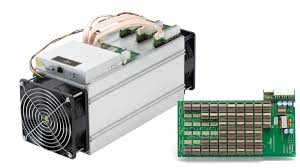
One of the most talked-about uses of ASICs is in cryptocurrency mining. In Bitcoin mining, ASICs are specially built to handle the SHA-256 algorithm, which validates transactions and adds new blocks to the blockchain.
These ASIC miners, such as Bitmain Antminer S19 or MicroBT Whatsminer, dominate the market due to their unmatched speed and efficiency compared to GPU or CPU mining rigs.
As cryptocurrency competition increases, ASICs have become essential for anyone serious about mining, offering significantly better hash rates and power efficiency.
ASICs in Consumer Electronics and AI
Beyond crypto, ASICs are increasingly important in:
- Smartphones: For camera processing, audio management, and power control.
- Artificial Intelligence: ASICs like Google’s TPU (Tensor Processing Unit) are specifically designed to handle machine learning tasks.
- IoT Devices: ASICs provide the necessary low-power, high-performance processing for sensors and smart home devices.
- Medical Devices: From pacemakers to imaging tools, ASICs help in precise and reliable performance.
Future of ASIC Technology
The future of ASICs is bright and evolving. With the rise of edge computing, AI, and 5G technologies, ASICs are expected to play a larger role in delivering ultra-fast, low-latency solutions. Many companies are investing in custom silicon solutions to outperform competitors and reduce reliance on traditional chip manufacturers.
Moreover, the integration of machine learning models into hardware via ASICs could revolutionize how devices operate — making them smarter, faster, and more power-efficient.
Should You Invest in ASICs for Mining or Tech Projects?
If you are a tech entrepreneur, hardware startup, or crypto enthusiast, investing in ASIC technology can be a game-changer. However, it’s essential to evaluate the scale of your project, as the upfront cost and inflexibility may not be suitable for smaller or evolving applications.
In mining, ASICs are a must-have for profitability, especially in competitive environments. In tech, custom ASICs could give your product an edge — just be sure you’re confident in your design and long-term requirements.
Conclusion: Why ASIC Matters in 2025 and Beyond
From powering the blockchain to driving innovation in artificial intelligence and consumer tech, ASIC technology is here to stay. Its unparalleled efficiency, customizability, and performance make it ideal for the future of computing.
Whether you’re a developer, investor, or simply tech-curious, understanding ASICs will help you navigate the next wave of digital innovation more confidently.
Keywords Used Naturally Throughout: ASIC, Application-Specific Integrated Circuit, ASIC mining, ASIC technology, what is an ASIC, advantages of ASIC, cryptocurrency ASIC.