
Federal Reserve Interest Rates: What They Are, How They Work, and Why They Matter in 2024
In the world of economics, few things carry as much weight as the Federal Reserve interest rates. These rates don’t just affect Wall Street traders or economists—they ripple through every aspect of American life, from mortgage payments and savings accounts to business loans and job growth. As we move through 2024, understanding what Federal Reserve interest rates are and how they impact the economy has never been more important.
In this comprehensive article, we’ll break down everything you need to know about Federal Reserve interest rates, how they are determined, their impact on inflation and the job market, and what to expect in the months ahead.

What Are Federal Reserve Interest Rates?
The term Federal Reserve interest rates generally refers to the federal funds rate—the interest rate at which banks lend money to each other overnight. This rate is set by the Federal Open Market Committee (FOMC), a group within the Federal Reserve that meets regularly to assess economic conditions and make decisions aimed at achieving two key objectives: maximum employment and stable prices.
When people talk about the Fed “raising rates” or “cutting rates,” they are referring to changes in the target range for the federal funds rate.
Why the Federal Reserve Changes Interest Rates
The Fed adjusts interest rates primarily to manage inflation and economic growth. When the economy is growing too fast and inflation is rising, the Fed may increase rates to make borrowing more expensive. This slows down consumer and business spending, helping to cool inflation. Conversely, when the economy is slowing or facing a recession, the Fed might lower rates to encourage borrowing and spending.
Here’s how that works in practice:
- Higher interest rates = Reduced borrowing, lower consumer spending, slower economic growth.
- Lower interest rates = Increased borrowing, higher consumer spending, potential inflation risk.
In 2022 and 2023, for instance, the Fed aggressively raised rates to combat the highest inflation levels seen in decades. By early 2024, those moves had begun to slow inflation, and analysts began speculating on potential rate cuts.
How Federal Reserve Interest Rates Affect You
Even if you’re not a banker or investor, the Federal Reserve interest rates can have a direct impact on your financial life:
1. Mortgage Rates
When the Fed raises its benchmark interest rate, mortgage lenders often follow suit. That means monthly payments on new home loans become more expensive. If you already have a fixed-rate mortgage, your payments won’t change—but if you’re shopping for a home, the cost of borrowing will.
2. Credit Card APRs
Most credit card rates are variable and closely tied to the Fed’s rate. When interest rates go up, so do your credit card payments—making it more expensive to carry a balance.
3. Savings Account Yields
Higher Fed interest rates can also mean higher returns on savings. Banks are more likely to offer attractive yields on high-yield savings accounts or CDs when rates are high.
4. Auto and Student Loans
Interest rates on new car loans and student loans can climb when the Fed tightens policy, affecting affordability.
5. Job Market and Business Growth
Higher rates can slow business expansion by increasing borrowing costs, which may eventually affect hiring. That means fewer job opportunities or slower wage growth in some sectors.
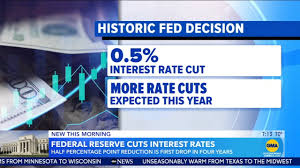
Federal Reserve Interest Rates and Inflation in 2024
As of mid-2024, inflation is still a top concern for policymakers. While the pace has cooled compared to its 2022 peak, the Fed remains cautious. Analysts expect the Fed to maintain relatively high interest rates through at least the second half of the year, with potential rate cuts coming only if inflation continues to fall toward the 2% target.
Inflation and interest rates are like opposite sides of a see-saw: as inflation goes up, the Fed raises rates to push it down. But rate hikes take time to filter through the economy—typically 6 to 18 months. That’s why the Fed often takes a “wait-and-see” approach before reversing course.
How the Federal Reserve Decides Interest Rates
The decision to change rates isn’t taken lightly. The FOMC reviews a wide range of economic data, including:
- Inflation rates (CPI, PCE index)
- Unemployment figures
- GDP growth
- Consumer spending and confidence
- Global economic trends
The FOMC meets eight times a year to evaluate these metrics and determine whether interest rates need adjusting. These meetings are closely watched by economists, investors, and journalists alike.
Predictions: Where Are Federal Reserve Interest Rates Headed?
Looking ahead, the direction of Federal Reserve interest rates in late 2024 will largely depend on inflation and labor market data. Here are a few expert expectations:
- If inflation stays high, the Fed is likely to hold rates steady or even increase them.
- If inflation falls significantly, the Fed may begin gradual rate cuts to stimulate growth.
- If the job market weakens, rate cuts could come sooner than expected to prevent a recession.
Many economists anticipate a shift toward easing in early 2025, but that remains speculative. The Fed has emphasized its data-dependent strategy, meaning rates will respond directly to how the economy performs in the coming months.
The Global Impact of Federal Reserve Interest Rates
The Fed’s policies don’t just affect the United States. Because the U.S. dollar is a global reserve currency, Federal Reserve interest rates influence:
- Global financial markets
- Exchange rates
- Foreign investment flows
- Emerging market economies
When the Fed raises rates, capital tends to flow into the U.S., strengthening the dollar. This can create challenges for other countries, especially those with dollar-denominated debt.
Final Thoughts: Why You Should Pay Attention to Federal Reserve Interest Rates
Whether you’re an investor, business owner, or average American consumer, the Federal Reserve interest rates affect your wallet. In today’s dynamic economic landscape, understanding how these rates work gives you a better grasp of personal finance, investment strategy, and even your next big purchase.
As 2024 unfolds, stay informed. Watch the Fed’s statements, track inflation trends, and prepare your finances for changes—whether that means locking in a mortgage rate, reducing debt, or shopping for better returns on your savings.
One thing is certain: Federal Reserve interest rates will continue to shape the economy—and your financial future.
Keywords: federal reserve interest rates, how interest rates work, inflation and interest rates 2024, Fed rate predictions, federal reserve policy, FOMC decisions, mortgage and Fed rates.
