
Tiangong – China’s Space Station Pushing the Boundaries of Human Space Exploration
In recent years, the word “Tiangong” has been making headlines in space exploration circles, and for good reason. Derived from the Chinese word meaning “Heavenly Palace,” Tiangong refers to China’s ambitious space station project that aims to establish the country as a dominant force in orbit. With successful module launches, astronaut missions, and scientific experiments already underway, Tiangong isn’t just a symbol of national pride—it’s a beacon signaling China’s serious commitment to long-term space habitation and research.
In this article, we explore what Tiangong is, how it compares to other space stations, what it means for global space cooperation, and why the world should pay attention.

What is Tiangong?
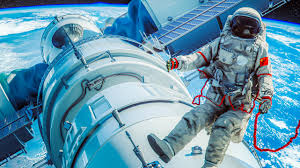
Tiangong is China’s modular space station, designed and operated by the China National Space Administration (CNSA). It is orbiting Earth in low Earth orbit (LEO) at around 340 to 450 kilometers above the surface. The space station’s construction began with the launch of its core module, Tianhe, in April 2021. Two additional laboratory modules, Wentian and Mengtian, were later attached to complete its T-shaped structure.
This space station represents the third phase of China’s human spaceflight program and is expected to remain operational for at least 10 to 15 years. It is capable of hosting up to six astronauts for short durations and three for extended missions.
A Brief History of the Tiangong Program
The Tiangong program began with two earlier prototypes, Tiangong-1 and Tiangong-2, which served as test beds for key technologies in space docking, life support, and astronaut training.
- Tiangong-1, launched in 2011, helped China test autonomous rendezvous and docking procedures.
- Tiangong-2, launched in 2016, served as a more advanced platform and hosted a crew for a 30-day mission.
These missions paved the way for the fully-fledged Tiangong space station, demonstrating China’s steady progress in human spaceflight technology.
Tiangong vs. The International Space Station (ISS)
While the International Space Station (ISS) remains the most prominent space lab in orbit, it is nearing the end of its operational life, with potential decommissioning between 2030–2032. That gives Tiangong the opportunity to become the only functioning space station in orbit within the next decade.
Here’s how the two compare:
| Feature | Tiangong | International Space Station (ISS) |
|---|---|---|
| Operator | China (CNSA) | USA, Russia, ESA, JAXA, Canada |
| Launch Year | 2021 | 1998 |
| Expected Lifespan | 10–15 years | ~30 years (end by 2030-2032) |
| Capacity | Up to 6 astronauts | Up to 7 astronauts |
| Orbit Altitude | ~400 km | ~400 km |
| Modules | 3 main modules | 16+ modules |
| International Access | Limited | Open to global collaboration |
While the ISS is larger and more internationally collaborative, Tiangong’s state-of-the-art design and recent construction give it advantages in automation, energy efficiency, and modular flexibility.
Scientific Research on Tiangong
One of the primary goals of Tiangong is to serve as a platform for scientific research across various fields. The station is equipped with advanced facilities to conduct experiments in:
- Microgravity physics
- Biological and medical studies
- Materials science
- Space environment monitoring
For instance, Tiangong has already hosted experiments involving cold atom physics, protein crystallization, and plant growth in space—each of which holds potential for real-world applications on Earth and future long-duration space missions.
International Collaboration: Is Tiangong Open to the World?
Although Tiangong is primarily a national project, China has expressed interest in international cooperation. In partnership with the United Nations Office for Outer Space Affairs (UNOOSA), China opened applications for foreign experiments aboard Tiangong.
Selected international experiments have already come from countries such as:
- Germany
- Italy
- Kenya
- Japan
- Saudi Arabia
This marks a shift in space geopolitics, where China positions itself as an alternative partner for nations excluded from the ISS program or seeking diversified alliances in space.
Future of Tiangong: What Comes Next?
The future roadmap for Tiangong is ambitious. China aims to:
- Keep the station operational through 2035 and beyond
- Possibly expand with additional modules
- Launch a space telescope named Xuntian, which will operate in tandem with Tiangong and dock when needed
- Prepare for eventual crewed lunar missions using technologies developed aboard the station
There are also hints that Tiangong may serve as a staging ground for deep-space exploration, particularly as China eyes Mars and asteroid missions in the next two decades.
Why Tiangong Matters
The emergence of Tiangong as a functioning space station reflects a broader shift in the balance of space power. For decades, the U.S. and Russia dominated crewed spaceflight. Now, China is solidly in the mix—not just participating but leading in some areas.
Here are a few reasons why Tiangong matters globally:
- It ensures continued human presence in space even after the ISS retires.
- It democratizes space access for nations previously shut out of ISS collaborations.
- It fosters competition and innovation in space technologies.
- It opens the door for multi-polar leadership in humanity’s space future.
Final Thoughts
The story of Tiangong is still unfolding, but it’s already one of the most compelling chapters in modern space exploration. With technological excellence, long-term vision, and international outreach, China’s space station is poised to reshape humanity’s relationship with space.
For now, the “Heavenly Palace” floats silently above us—but its impact will resonate far into the future.
