Victor Conte: The Shadow King of Sports Science Exposed
From jazz bass lines to a multi-million-dollar supplement empire—and a prison cell in between—Victor Conte is one of sport’s most polarizing figures. He remains at the center of whispers and headlines alike, as the man who blurred the line between nutrition coaching and underground doping. Digging into his story reveals chilling questions about fairness, power and what we really know about performance.
The improbable rise
Born in 1950 in Fresno, California, Conte started out far from the world of elite athletics. He played bass guitar in funk and R&B groups, even performing with Tower of Power in the 1970s. (Wikipedia)
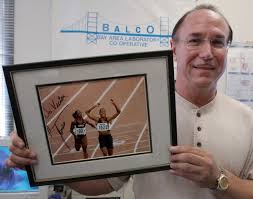
In 1984 he founded Bay Area Laboratory Co‑operative (BALCO)—first a nutrition centre offering blood tests, mineral analysis and ultra-personalised supplementation. (ESPN.com) At this point, Conte’s pitch was legitimate: optimise recovery, fill in gaps, work with trace minerals and hormones.
He quickly drew high-level athletes; in the late 1990s and early 2000s his client list reportedly included Olympic sprinters, NFL stars, baseball heavyweights and bodybuilding legends. (SI)
The scandal that shook sport
But beneath the clean façade, BALCO and Conte’s operation faced a darker reality. Investigators accused him of overseeing the creation and distribution of designer steroids—most notoriously tetrahydrogestrinone (THG), dubbed “The Clear”—which evaded detection by drug-testing agencies. (insidethegames.biz)
In September 2003, federal agents raided BALCO’s offices after a tip led to a syringe residue being analysed and traced back to the lab’s methods. (ESPN.com) Conte was indicted on 42 counts including conspiracy to distribute steroids and money laundering. He eventually pled guilty to two counts and served just four months in federal prison, plus home confinement. (SI)
The scandal cost athletes records, sponsors and credibility—most famously, Marion Jones lost her Olympic medals, and Barry Bonds’s home-run era came under intense scrutiny. (Baseball Reference)
Reinvention or redemption?
After prison, Conte relaunched himself. He started SNAC Nutrition (Scientific Nutrition for Advanced Conditioning), offering legal supplements and performance regime services—especially in boxing. (SI)
Today he publicly claims to be an anti-doping advocate, using his knowledge of the cheat-code side of sport to help build stronger testing systems. (wbur.org) Whether this is genuine redemption or savvy brand rehabilitation remains fiercely debated.
Why Victor Conte matters—today
- Integrity of sport: Conte’s story underlines how the performance edge in elite sport can shift from training and talent to chemistry and secrecy.
- Supply & demand in doping: His operation showed how demand for the edge created supply chains, chemists, labs and methods to evade detection—raising the stakes for regulators. (insidethegames.biz)
- Supplement industry complexity: Conte’s transition into legal supplements highlights how blurred the line can be between “legal” performance optimisation and illicit enhancement.
- Legacy and culture: Even years later he claims that sport testing is still “duck-and-dodge” and that the majority of elite athletes engage in enhancement practices. (ESPN.com)
What you should ask
- How many athletes who broke records during the late 1990s-2000s era had assistance of the kind Conte provided?
- When someone who once provided illegal performance-enhancers becomes a legal supplement provider, how should we evaluate their claims?
- If the detection systems can be evaded, as Conte claims they were, what does that mean for the trust we place in records, medals and sport history?
- How does the supplement industry regulate itself when former doping-scandal figures are central players?

Final word
Victor Conte’s journey—from musician to nutrition guru to convicted conspirator to industry reinvention—is wild, unsettling and deeply revealing of elite sport’s underbelly. His name continues to carry weight, both as a symbol of cheating and of transformation. Whether you view him as a villain, a visionary or both, one thing is clear: when you see performances that seem superhuman, you cannot assume the story is just talent plus training anymore.
And if you’re chasing peak performance—whether in gym, sport or business—you’d be wise to ask: which side of the line am I on?
