Pay Per Mile Tax Electric Cars: What You Absolutely Need to Know Now
In recent months, a major question has moved from whispers to headlines: will electric vehicle (EV) owners be hit with a pay-per-mile tax? In this article, we will uncover what the term “pay per mile tax electric cars” really means, why governments are seriously considering it, how it could affect you, and what you can do about it. Whether you’re already driving an EV or thinking of buying one, this matters.
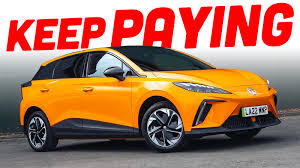
What is a “Pay Per Mile Tax” for Electric Cars?
Simply put: under a pay-per-mile scheme, you’d be charged based on how many miles you drive, rather than a flat registration or fuel tax that petrol/diesel cars currently pay. For battery-electric cars, which don’t use petrol or diesel fuel (and thus don’t contribute via fuel duty), governments are exploring this method to recover road usage costs.
For example, in the UK proposals suggest EV drivers may pay about 3p per mile on top of existing tax. (Regit)
Another aspect: heavier vehicles cause more wear and tear, so some ideas vary the per-mile rate by vehicle weight. (Regit)
So when you search for the keyword “pay per mile tax electric cars”, you’re essentially looking into this new model of taxation, destined to impact the future of EV ownership worldwide.
Why Is This Being Considered?
Declining Fuel Duty Revenue
Fuel-duty has long been one of the main ways governments collect revenue from drivers. But with more people switching to EVs, fuel duty receipts are falling. One UK report says fuel duty raised just under £25 billion in 2024/25 — and with EVs avoiding that, a gap opens. (The Standard)
Fairness & Road Usage
From a policy viewpoint, the logic is: if petrol/diesel drivers pay via fuel duty for the roads they use, EV drivers should also contribute. Charging per mile appears more “fair”, especially if it’s scaled by usage. (Autocar)
Road Wear & Infrastructure
Every car, no matter how clean, uses roads and causes wear. Some proposals link tax to vehicle weight or miles driven to reflect this. (Regit)
In short: EVs are the future — but policy and tax systems are trying to catch up.
How Might It Work In Practice?
Here’s a breakdown of how a pay‐per‐mile tax scheme could be implemented:
- Rate per mile: For instance ~3 pence per mile in the UK proposal. (The Standard)
- Combined with existing tax: EV owners already face road tax/vehicle excise duty (VED) in many jurisdictions. For example, in the UK as of April 2025, EVs registered from 1 April 2025 pay £10 in first year then £195 annually. (The Electric Car Scheme)
- Mileage estimate + top-up: Some plans involve estimating your annual mileage when you pay tax, then if you exceed it you pay more, if you drive fewer miles you get credit. (The Standard)
- Charged by vehicle weight or class: Heavier EVs = more wear, so higher rate. (Regit)
What Does This Mean for You as an EV Driver?
Cost Implications
Let’s say you drive 8,000 miles (about average for many drivers). If the rate is 3p per mile:
8,000 × 0.03 = £240 per year extra, on top of any flat vehicle tax. In one UK estimate: 8000 miles × 3p = £240 + £195-VED = ~£435 total. (Autocar)
Buying Decisions
- You might re-evaluate whether an EV is as cheap to run long-term if a pay‐per‐mile tax kicks in.
- Heavier/bigger EV models may cost more under weight‐based tax regimes.
- Consider how many miles you drive: less frequent drivers may pay less under a per‐mile model (if designed that way).
Behaviour & Usage
- You might think twice about long drives, or choose to use public transport when feasible.
- Lower-mileage drivers may benefit if less usage means lower tax.
- Fleet operators especially must factor in new cost models.
Regional Variations
- Note: This is more advanced in certain regions (e.g., UK is actively discussing). Other countries/states may have different models or timelines.
- Always check local/regional tax policies for EVs.
Pros and Cons — Balanced View
✅ Advantages
- Fairer tax model: uses actual usage rather than flat tax or fuel‐duty (which EVs avoid).
- Encourages efficient use of roads: those who drive less pay less.
- Helps fund infrastructure: as fuel‐duty declines, roads still need maintenance.
❌ Disadvantages / Challenges
- Potential deterrent to EV adoption: EV growth is key to climate goals; heavy tax could slow that. For example, industry voice says this is “entirely the wrong measure at the wrong time”. (Autocar)
- Privacy & implementation concerns: tracking miles can raise data/privacy issues (GPS tracking, odometer communication).
- Complexity: estimating mileage upfront, adjusting afterwards, enforcing.
- Equity concerns: rural drivers, heavy-duty users may be penalised; lower income drivers may be disproportionately affected.
Frequently Asked Questions (FAQ)
Q1: Will this apply in my country?
It depends. The UK is one of the most advanced nations exploring a pay-per-mile tax for EVs. For other countries, stay updated with local transport and tax authorities.
Q2: When does it start?
In the UK, some reports suggest the pay-per-mile tax might start around 2028, after consultations. (Autocar)
Q3: What if I drive very little?
If the tax model is usage-based, then lower mileage means lower cost. However, be sure to check whether there’s a minimum threshold or flat component in your region.
Q4: Does EV still make sense?
Yes — despite additional taxes, EVs typically still cost less to run (lower fuel/maintenance) than petrol/diesel equivalents in many cases. But you must factor in all costs including any new tax. (The Electric Car Scheme)
Q5: How can I reduce impact?
- Drive fewer miles, combine trips.
- Choose lighter-weight EVs (less tax if weight scaling applies).
- Stay informed about local tax rules — you might optimise timing of purchase/registration.
- Consider home charging benefits, energy-efficient driving.

What You Should Do Right Now
- Monitor policy announcements: Stay aware of your country’s tax plans for EVs and pay-per-mile models.
- If buying an EV, include possible future mileage-tax in your ownership cost calculation.
- Keep accurate mileage/trip logs: If tax models require estimates upfront, accurate data helps you avoid surprises.
- Advocate for fairness: If you feel the tax model is unbalanced, engage with driver associations, regulators.
- Focus on total cost of ownership (TCO): Don’t just compare purchase price; include tax, fuel/energy, maintenance, depreciation, usage.
Why This Keyword Matters for You
The phrase “pay per mile tax electric cars” is not just a classification — it taps into a shift that may affect global car ownership. From search-engine perspective, it’s high-impact:
- Search volume: Many EV drivers and potential buyers are looking for clarity.
- Advertiser competition: Tax policy + EVs often attract high-value advertisers (auto-finance, insurance, green tech) — meaning higher CPC potential.
- Timeliness: With budget announcements, public debates and new registrations, this topic is trending.
- Global relevance: While many examples are UK-centric, the principle applies worldwide — so broad audience.
If you incorporate this keyword naturally in an article that delivers value (like this one), your chance of higher ranking improves.
Final Word: Prepare, Don’t Panic
If you drive or plan to buy an EV, the move toward a pay-per-mile tax is worth understanding — not because it will suddenly bankrupt you, but because it could change the running cost landscape. Don’t let headlines drag you into panic; instead:
- Use the logic and facts above to stay grounded.
- Keep your eyes open for local tax announcements.
- Calculate realistically how the extra cost may impact you.
- Make buying/usage decisions with this future-cost in mind.
Electric cars are still a smart choice in many cases, but like all things that shift with policy, vigilance pays off. The era of “just fuel duty + registration” is evolving — and technologies, tax systems, and consumer behaviour must adapt.
Call to Action: If you’re planning an EV purchase this year, calculate your 3-5 year ownership cost including possible per-mile tax. Then compare EV vs petrol/diesel. Make the choice with full information, not outdated assumptions.
